Old Albion Cottage History
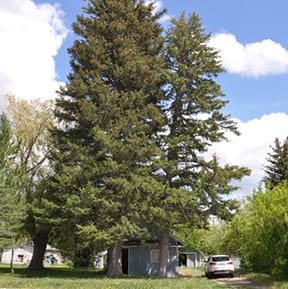
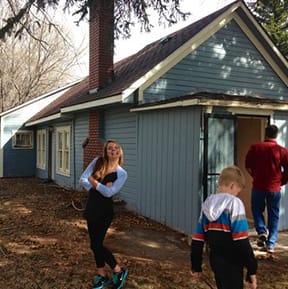
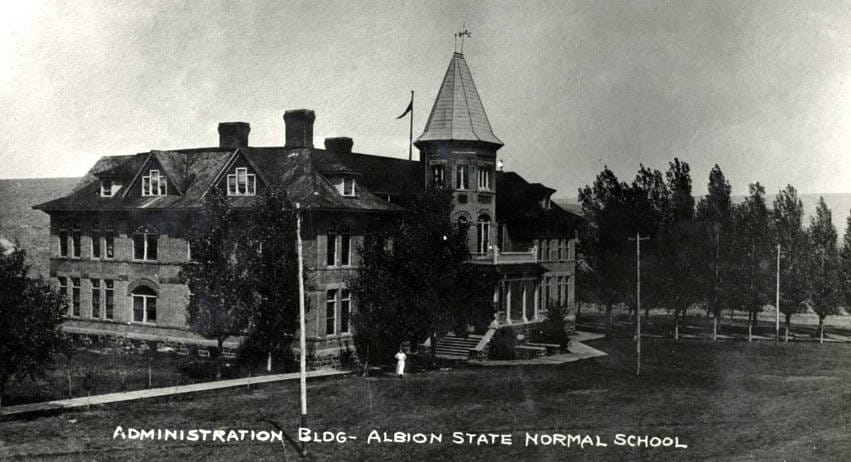
This 1,050 square foot cottage was originally built in 1925 and is reputed to have been the school marm’s house for the Albion Normal School, a teachers college that was established in 1893 and closed in 1951. The Mortensen family bought the 6-acre Normal School campus a few blocks away in 2007 from city auction and has turned it into the beautiful Albion Campus Retreat. The owners were kind enough to host us in 2013, and we were awestruck at the refurbished beauty of the place.
Because the Normal School site has always been a favorite of local teens out for a scare, they further developed it to be Haunted Mansions of Albion. Check out written accounts of the paranormal investigations of their property and videos on YouTube if you love to be spooked. As for our Old Albion Cottage, our contractor and our family have never even heard a ghostly whisper. We have only felt the peace that surrounds us here. No spooks to be found…
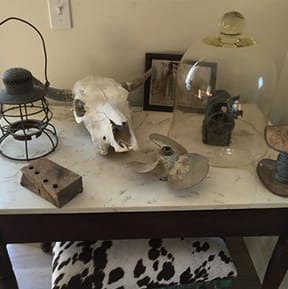
My family inherited Old Albion Cottage from my dad, Ron Bennett, when he passed away in April, 2012. He was my very favorite person in the world, known by everybody to have a mischievous twinkle in his eye and a gentle soul. His National Guard photo is on the marble-topped table.
Dad bought 125 West Street for $10,000 in the 1990s. He believed Albion would develop as a resort town due to nearby City of Rocks and Pomerelle Mountain Resort, much like the little town of Hailey did around Sun Valley.
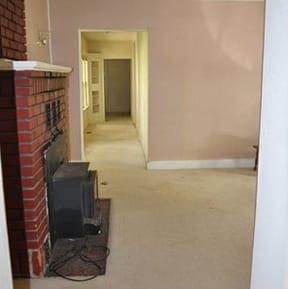
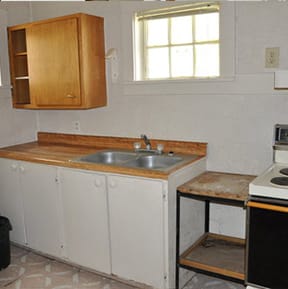
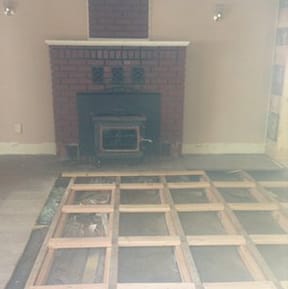
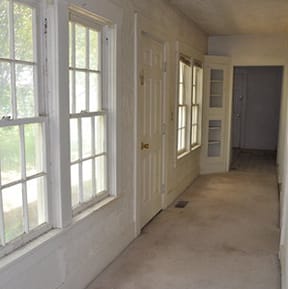
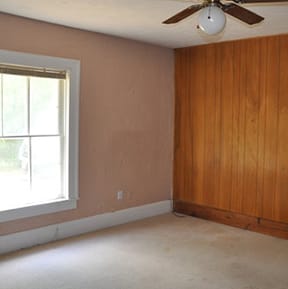
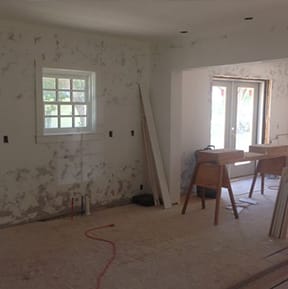
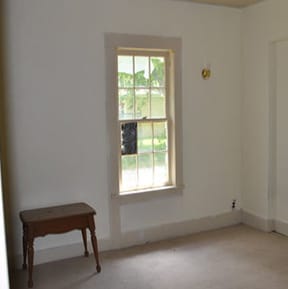
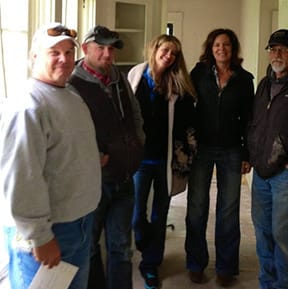
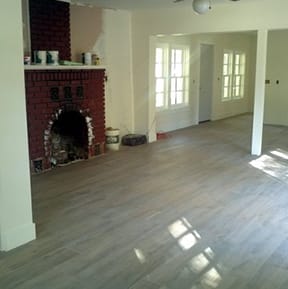
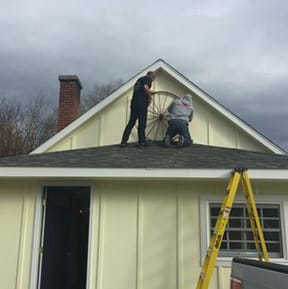
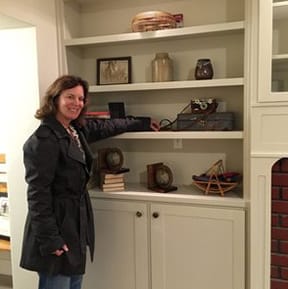
When I inherited the cottage, it was appraised at $30,000. He’d rented the cottage out for many years until we refurbished it in 2013 with the help of local contractor and craftsman, Dave Zanone. My friend and talented designer, Mercedes Brennan (1chicretreat.com), fell in love with the place and flew in several times to help decorate with a style we call “not your grandma’s cabin.”
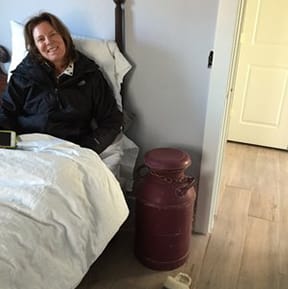
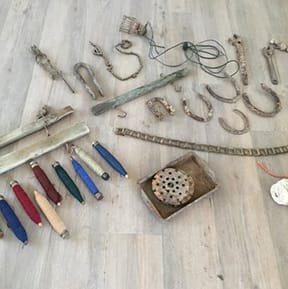
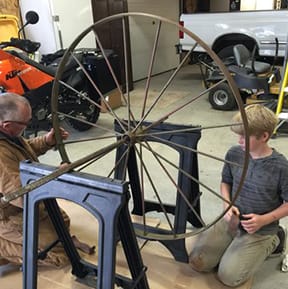
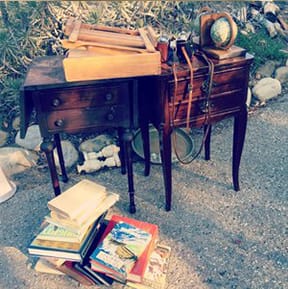
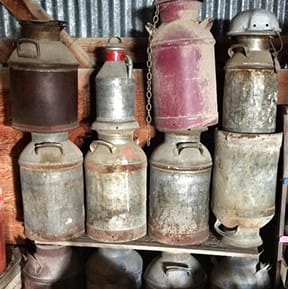
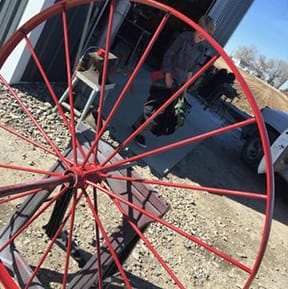
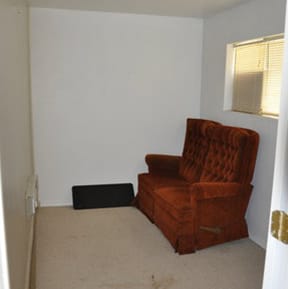
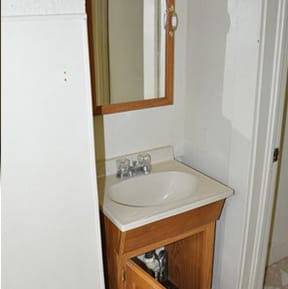
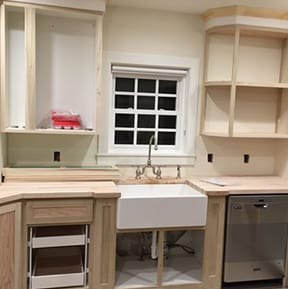
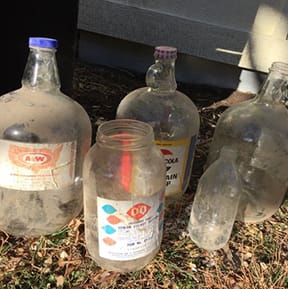
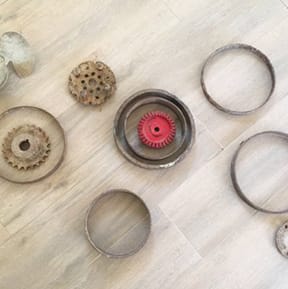
My Aunt Becky and Uncle Chuck graciously donated furniture and barn items from their Burley dairy farm for décor. They still tease me for loving and decorating with what I fished out of their barn scrap pile. What one person calls scrap another calls treasure! The redesign and refurbishment of Old Albion Cottage has been a work of love, as you can see from the gallery below.
Albion’s History
Albion, Idaho currently has a population of 267 and sits between the Black Pine Mountains to the east, the Raft River Mountains to the southeast, and the Snake River Valley Plain to the north. Founded by Oregon California Trail settlers, this little town was the county seat from 1879 to 1918.
With many stage stations nearby including one at City of Rocks and another at Oakley Meadows, Albion has a rich history and a strong historical society. Albion settlement began in 1873, with four Mormon pioneers each staking 160 acres. Idaho’s rarest plant, Christ’s Indian Sagebrush, is found nowhere else besides Mount Harrison at 9,100 feet elevation. Davis’ springparsley is also endemic to Albion as is the South Hills crossbill.
Idaho’s Sheep and Cattle War
Long before the U.S. Army and homesteaders arrived here, sheep roamed Southern Idaho. Herded primarily by Native Americans, Mexican and Hispanic villagers, and Eastern Europeans (primarily Basque), these human populations were a race apart from the white ranchers and cowboys who competed for grazing lands needed for cattle ranchers. Click here to read more about Idaho’s rich history of development and the tensions between the communities that shared in it.
Diamondfield Jack
Diamondfield Jack was imprisoned in Albion, Idaho from 1896-1902 for the shooting and murder of two local sheepherders, John Wilson and Daniel Cummings. Read about this fascinating old west character as well as others on the Albion Historical Society website.
Southern Idaho’s American Indian Communities
The two major groups of Idaho Indian Peoples in Southern Idaho are the Shoshoni and Northern Paiute. Southern Idaho Indians were predominantly nomadic based on availability of food. A rich trade between Idaho Indian Peoples and white settlers developed in the early 1800s for firearms, knives, tools, traps, fish hooks, kettles, cloth, glass beads, vermilion, tobacco–and, unfortunately, “firewater” as well.
By the 1860s, America’s gold rush brought white settlers by the thousands, resulting in tension for Indian lands. As a result, Idaho’s Indian Peoples were forced onto U.S. government controlled reservations. Today, most southern Idaho Indians live at Fort Hall, where the Shoshoni form the great majority. The name “Bannock” is given to a people of Northern Paiute origin who also live at Fort Hall, and another small Paiute band live at Duck Valley on the southern boundary of this state.
Other Links About Southern Idaho’s History: